- Diagnostic
- $80 flat
- Ordinary repair
- $180–$1,050
- Sealed system
- $900–$2,360
- New appliance
- $4,200–$14,500
- Half the cheapest
- $2,100
- Bands under it
- 6 of 7
Every figure on this sheet is computed from the same band table the estimate is written from. None of it is typed into the prose.
Repair it, or replace it
The question everyone asks first, answered with the two numbers that settle it: what the repair costs, and what the appliance standing in the opening would cost to replace.
What the 50 percent rule actually says
The rule people have heard is simple enough: repair the appliance when the repair costs less than half of replacing it, and replace it when the repair costs more. It is a rule of thumb rather than a law, and it was written for a market of freestanding machines that can be wheeled out and swapped in an afternoon.
A built-in is not that. It was fitted into an opening that was cut for it, wired to a circuit chosen for it, and finished with cabinetry built around it. The rule still helps, but the replacement side of the comparison is larger than a price tag — and that is what usually settles the question.
Where the line falls on this equipment
A comparable new Thermador unit is $4,200–$14,500, appliance only. Half of the cheapest of those is $2,100, and that is the line the rule draws.
Set the repair bands against it. 6 of the 7 bands on this site finish below $2,100 outright. The only band that reaches it is the refrigeration column sealed system — and it reaches the line only at the very top of its range, measured against the very cheapest replacement.
That is the whole reason this company argues for the repair more often than not. It is not loyalty to repairing things. It is that on equipment bought at this level, the arithmetic is rarely close.
When the repair is clearly worth it
When one part has failed on a cabinet that is otherwise sound. A board, a fan, a sensor, a seal, a latch, an igniter — these are the ordinary repairs, they run $180–$1,050, and every one of them is a fraction of the replacement figure. A control board at $440–$1,050 on a fifteen-year-old cabinet with good doors and a quiet compressor is not a difficult decision.
It is worth it for a second reason that has nothing to do with the appliance. Built-in equipment has to leave its opening before most of it can be worked on. Cabinet width, top clearance, panel weight, the door casing and the route out of the room decide how a visit runs, so we ask about them before we arrive rather than on the doorstep. Replacing a built-in frequently means a cabinetry change as well, because openings and panel systems move between generations. That cost is real and it is not on any price list.
When it is a judgement call
When the repair is a sealed system, when the cabinet is past twenty, or when this is the second significant failure in the same year. A sealed system is $900–$2,360, which is the one band where the comparison genuinely tightens. None of those three facts decides anything on its own. Two of them together usually do.
The honest version of this conversation happens at the door with the fault already read, not on the phone with a symptom description. That is what the $80 diagnostic buys: a decision made on measurements rather than on a guess about what the noise might be.
When it is not worth it
When several systems are failing at once — a sealed system and a board and doors that no longer pull closed, inside the same twelve months. At that point each repair buys a few months before the next one, and the total approaches the replacement figure without ever producing a sound appliance.
And when the part is genuinely gone. Some components for out-of-production platforms are still in OEM distribution, some exist only as a superseded version that needs the harness adapted, and some have run out. We say which of the three you are in before anybody pays for anything, and a photograph of the model and serial plate at booking is what makes that possible.
What we will not put in this arithmetic
A lifespan figure of our own. We have not measured one, and a number invented to make a decision look obvious is worse than no number. What the trade generally observes is that built-in kitchen equipment reaches the end of its electronics life well before its cabinet does — which is exactly why so many of these repairs are a board or a fan rather than a machine.
We will also not put a thumb on the scale with a statistic about how many repairs succeed. Doctors Lake Kitchen Co. is an independent company, not a manufacturer’s service arm, and the only figures on this page are the researched band table and the cost of a new appliance. Both are below.
How to use the two tables
Find the band your symptom is likely to land in, read across, and compare it with the replacement row for the same kind of appliance. Then add the things the replacement row does not carry: delivery, installation, the cabinetry if the opening has to change, and the days without the appliance.
If the repair still looks like the cheaper side after that, it is. The pricing sheet explains how a visit is quoted, the warranty page covers what 90 days on labour and 365 days on parts actually means, and the work index lists the six families we take on. Anything not answered there is a question worth asking on the phone.
What does a repair cost, set against a new appliance?
The visit is $80. Beyond that, the honest answer is a band and not a number, because the same symptom has two or three candidate causes and they do not cost the same. The whole book is below. Parts and labour together, the work on this sheet lands between $180 and $2,360. The exact number is set down in writing once the fault has been read, and nothing is ordered until you have seen it.
| Repair | Parts and labour |
|---|---|
| Diagnostic visit, credited to the repair | $80 |
| Igniter, spark module or surface element | $200–$530 |
| Oven thermostat or temperature sensor | $180–$540 |
| Bake or broil element | $200–$560 |
| Convection fan or motor | $270–$730 |
| Control board or touch panel | $440–$1,050 |
| Door hinge, glass or seal | $200–$660 |
| Refrigeration column sealed system | $900–$2,360 |
When is it cheaper to replace the appliance?
A comparable Thermador wall oven, rangetop or column, appliance only — before delivery, installation or cabinetry. National appliance pricing, not Florida labour.
| New appliance | Appliance only |
|---|---|
| Wall oven, the usual repair-or-replace comparison | $4,200–$9,500 |
| Professional rangetop or range | $5,500–$14,500 |
Set the band against that figure rather than against nothing. A control board on a cabinet that is otherwise sound is almost always the cheaper side of the comparison; a sealed system on a column already past twenty is the one worth thinking about.
What do people ask before they decide?
- Is it worth fixing a built-in Thermador, or replacing it?
- Usually fixing, and the arithmetic says so rather than we do. A comparable new unit is $4,200–$14,500, appliance only, before delivery, installation or cabinetry. Every repair on this site except a sealed system lands in the $180–$1,050 range. The repair loses only when several things on the same cabinet are failing at once.
- What is the 50 percent rule for appliance repair?
- The usual form of it says repair when the repair costs less than half of replacing the appliance. Half of the cheapest comparable unit here is $2,100. On the published bands, 6 of the 7 repairs finish below that line, and only a sealed system reaches it at all.
- Is it worth repairing a twenty-year-old built-in?
- Age does not settle it — the part does. A control board at $440–$1,050 on a cabinet that is otherwise sound is the cheaper side of the comparison at any age. A sealed system at $900–$2,360 on a column already past twenty is the one that deserves a long think before you spend.
- What is the most expensive part to replace?
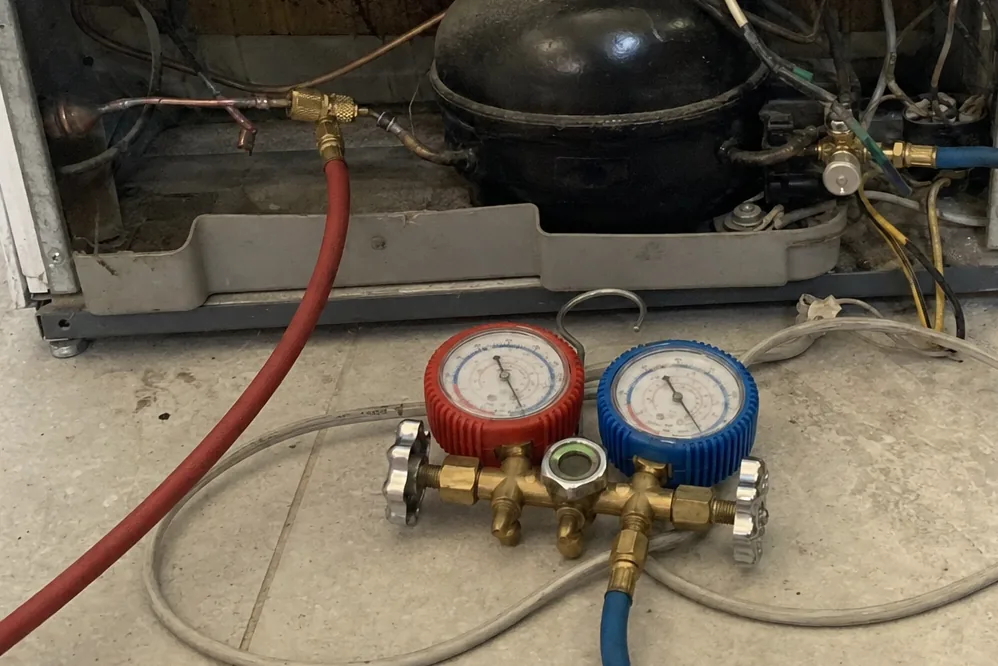
- The sealed refrigeration system, at $900–$2,360 parts and labour. That is exactly why it is the last thing opened rather than the first thing quoted. On cooking equipment the dearest single part is the control board or touch panel at $440–$1,050.
- Is replacing a compressor ever worth paying for?
- Often, but not always. The sealed-system band is $900–$2,360 and the replacement it is measured against is $4,200–$14,500, so the arithmetic still favours the repair on a sound cabinet. What flips it is a cabinet already losing seals, fans and a board in the same year: then you are buying time, not a repair.
- How long should equipment like this last?
- We publish no lifespan figure, because we have not measured one and will not borrow somebody else’s. What the trade generally observes is that built-in kitchen equipment reaches the end of its electronics life well before its cabinet gives up, which is why so many of these repairs are a board or a fan rather than a machine.
The $80 diagnostic is credited in full against the repair if you go ahead. If the answer turns out to be “replace it”, you have paid $80 to find that out from someone who is not selling appliances.